Best Fintech CFO Headhunters Ranked: Top 4 Recruiters for High-Growth Startups
09th May '26
Anyleads Team
11 minutes read
Best Fintech CFO Headhunters Ranked: Top 4 Recruiters for High-Growth Startups
The 4 best fintech CFO headhunters for high-growth startups (ranked)
Finding a finance chief who truly understands payments, crypto, and blitz-scale growth now decides whether a fintech hits its milestones. Investors expect airtight controls, and regulators keep raising the bar. Yet big recruiting firms still take 90–120 days to fill the role, draining runway and denting morale. We audited recent placements, speed, and retention to spotlight four specialists that deliver fintech-savvy CFOs in weeks, not months. Use this guide to compare their strengths, fees, and reach—so you can secure the right leader before the next board meeting.
How we ranked these headhunters
You’re trusting us to separate true fintech specialists from slick generalists, so we’re laying out the yardstick. We built a simple, weighted scorecard and fed each firm hard data from public placements, press releases, investor references, and self-reported metrics.
First, we asked, “Have you placed fintech CFOs in the last three years?” Recent wins counted more than older trophies, and each verified placement earned points. Next, we measured focus. A recruiter chasing every C-suite role across every sector scored lower than one dedicated to payments, crypto, or digital banking in order to outgrow the guesswork.
Speed matters because startups burn cash weekly. We rewarded firms that close searches in under 12 weeks and gave extra credit to those that surface a finalist slate within six. Client satisfaction came next. We looked at retention stats (how many CFOs are still in seat 12 months later) and cross-checked those numbers with founder and VC testimonials. Finally, we scored thought leadership and diversity commitment. White-paper output, conference talks, and published DEI results signal a recruiter who sees around corners instead of simply filling orders.
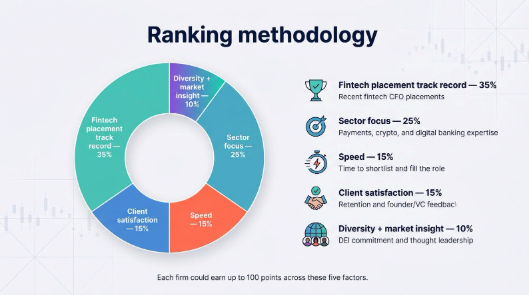
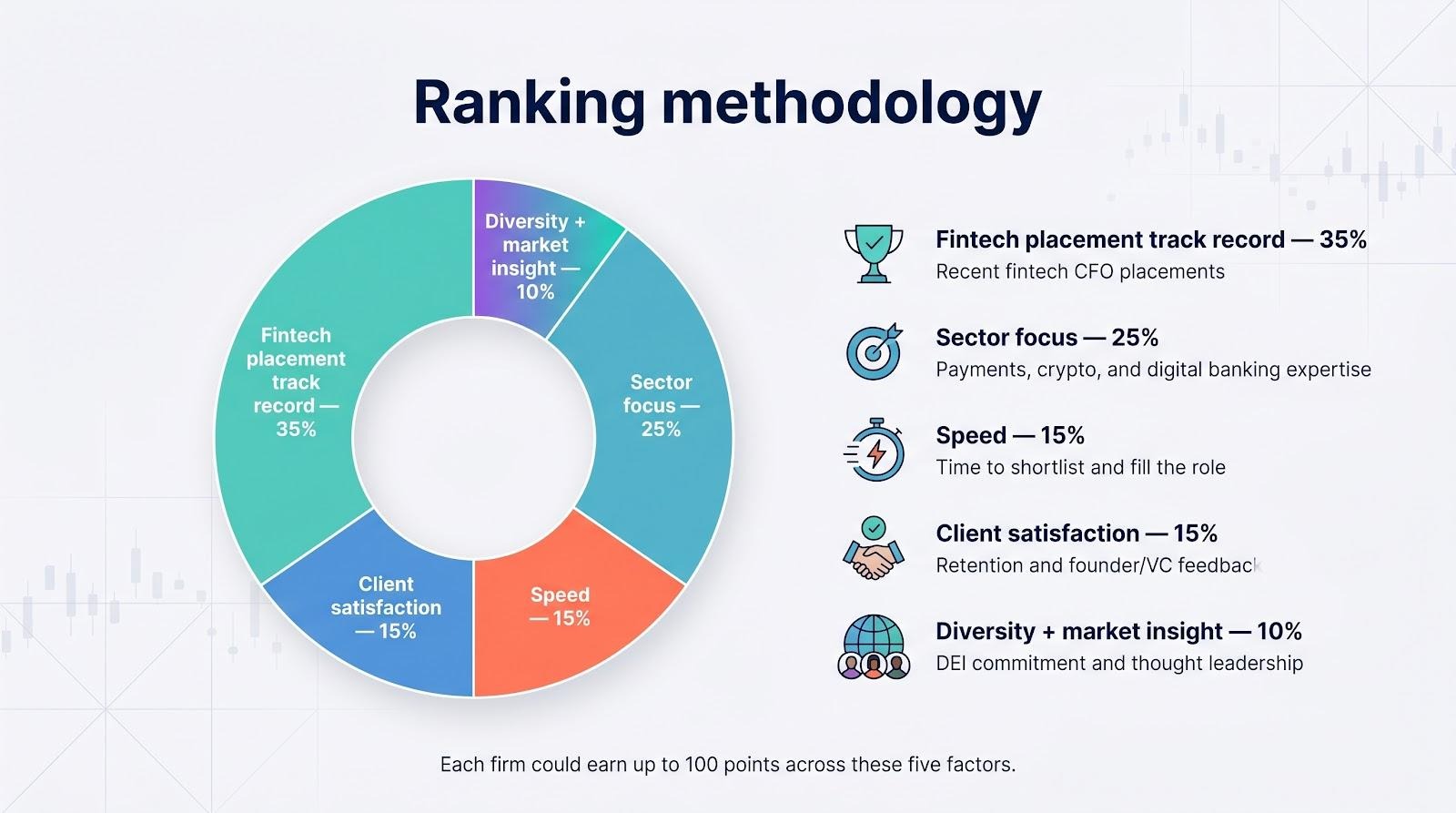
Weighting in brief: 35 percent to fintech placement track record, 25 percent to sector focus, 15 percent each to speed and client satisfaction, and 10 percent to diversity plus market insight. Each firm could earn a maximum of 100 points. The four that follow pulled away from the pack, often doubling the scores of global brands that merely dabble in fintech.
That’s the math behind the rankings. Now let’s meet the winners.
AI tools to find leads
Send emails at scale
Access to 15M+ companies
Access to 700M+ contacts
Data enrichment
AI SEO writer
Public professional emails
1. SPMB: Silicon Valley’s tech-native powerhouse
SPMB grew up in the same garages and demo days that launched today’s fintech unicorns, and that proximity shows. Headquartered in San Francisco, the firm has spent more than four decades as an executive search firm for innovators, filling C-suites for venture-backed disruptors. Partners here don’t need a primer on ARR, interchange fees, or the gap between Series B and pre-IPO nerves; they have lived those arcs alongside founders.
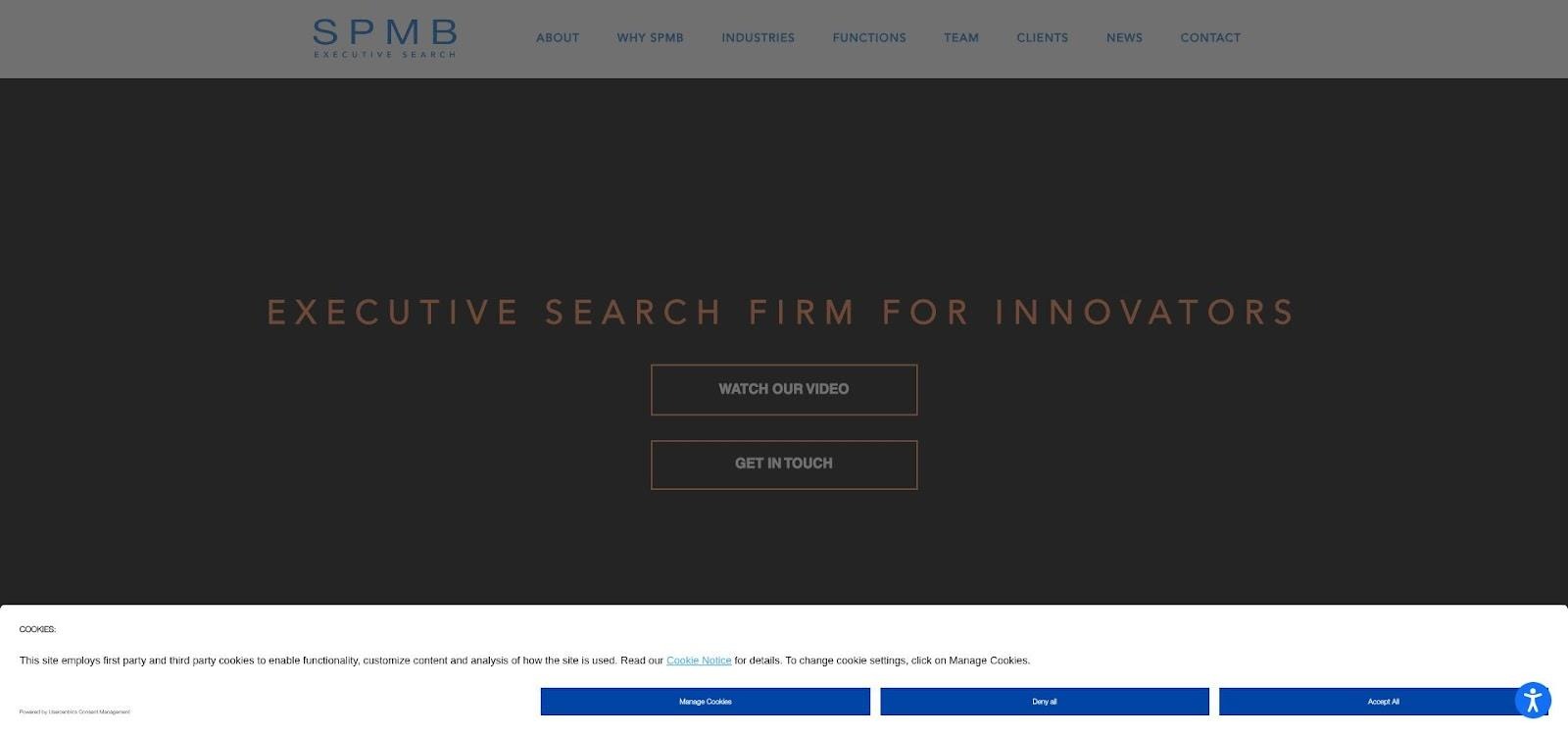
SPMB executive search firm website screenshot.
Founders praise SPMB’s network. Many partners held operating roles in tech, so they keep warm ties with finance leaders who prefer scaling chaos over corporate calm. When a blockchain-infrastructure startup needed a CFO to steer a nine-figure token treasury, SPMB surfaced three proven candidates within weeks. Similar wins in payments, wealth-tech, and insur-tech show that their pool runs deeper than the usual Wall Street roster.
Service feels boutique by design. A senior partner stays on every call, checks each reference, and coaches both sides through equity talks. That approach explains the firm’s strong stick rate: founders report most SPMB-placed CFOs remain on the cap table years later, often through IPO.
There are trade-offs. SPMB’s center of gravity is the United States, especially the Bay Area and New York corridor. If you need a London-based CFO versed in FCA filings, their bench thins, and they may lean on an overseas affiliate. Fees land around 30 percent of first-year cash comp, and very early-stage teams sometimes find the minimum engagement steep.
Who wins with SPMB? Series B to pre-IPO fintechs that want a CFO who can discuss structured credit at 9 am and product-led growth at noon. If your board wants someone who has steered a tech company from blitz-scale to ringing the Nasdaq bell, and you value a recruiter plugged into every West Coast term sheet, SPMB belongs on the shortlist.
2. True Search: global reach at startup speed
True launched in 2012 to serve venture and private-equity portfolios. It built processes for a world where funding cycles move in quarters, not years. That focus shows in its speed: the finance practice says it finds the eventual hire in about 25 days or less, according to a 2023 Taggd analysis (https://taggd.in/insights/top-executive-search-firms-in-india-and-globally/). For a founder with an eight-month runway, trimming even a few weeks can add a product sprint or a calmer board call.
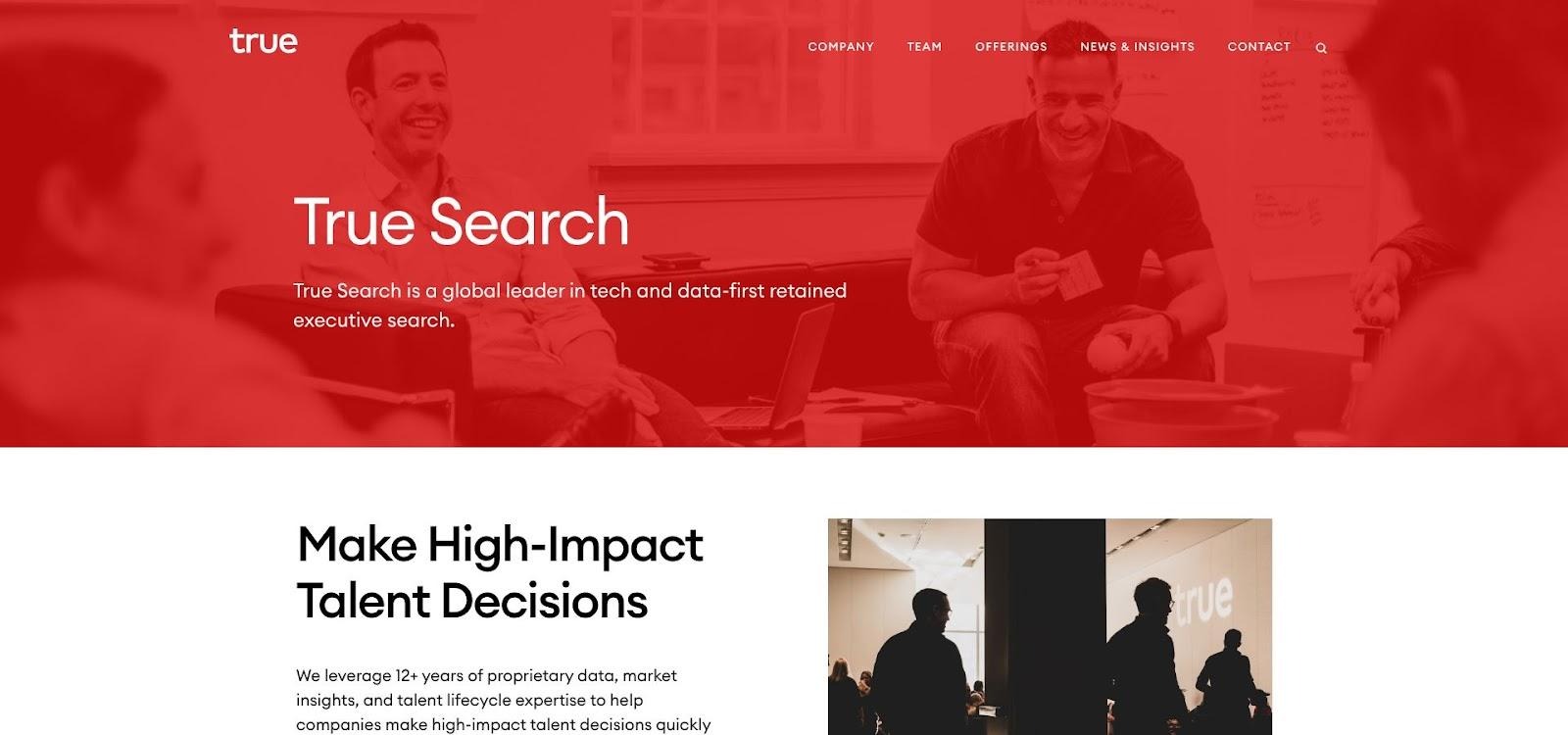
True Search global executive search website screenshot.
Scale does not slow them down. With more than twenty offices across North America, Europe, and Asia, True keeps a live database of 200 000 senior finance executives. That breadth pays off when you need, for instance, a Singapore-based CFO who has navigated PSD2 in Europe and prepaid card rules in Brazil. We have seen True run simultaneous slates across three continents without the “handoff lag” that hinders larger conglomerates.
Data drives every step. Market maps, compensation benchmarks, and diversity metrics arrive in clear dashboards, so you and your board can debate facts instead of gut feel. Founders also praise True’s AboveBoard partnership, which channels under-represented executives into each search and helps meet LP diversity mandates.
Speed and sophistication carry a price. Retained fees hover around one-third of first-year cash, paid in thirds. Smaller Series A teams may pause at the upfront installment, and True expects decision-makers to keep pace; if your internal interview cadence slows, their momentum stalls.
Choose True when international expansion, tight timelines, or investor scrutiny demand a brand name with numbers to back it up. If you are eyeing an IPO roadshow in two years and need a CFO who has already worn that suit, True offers the quickest path from wish list to signed offer.
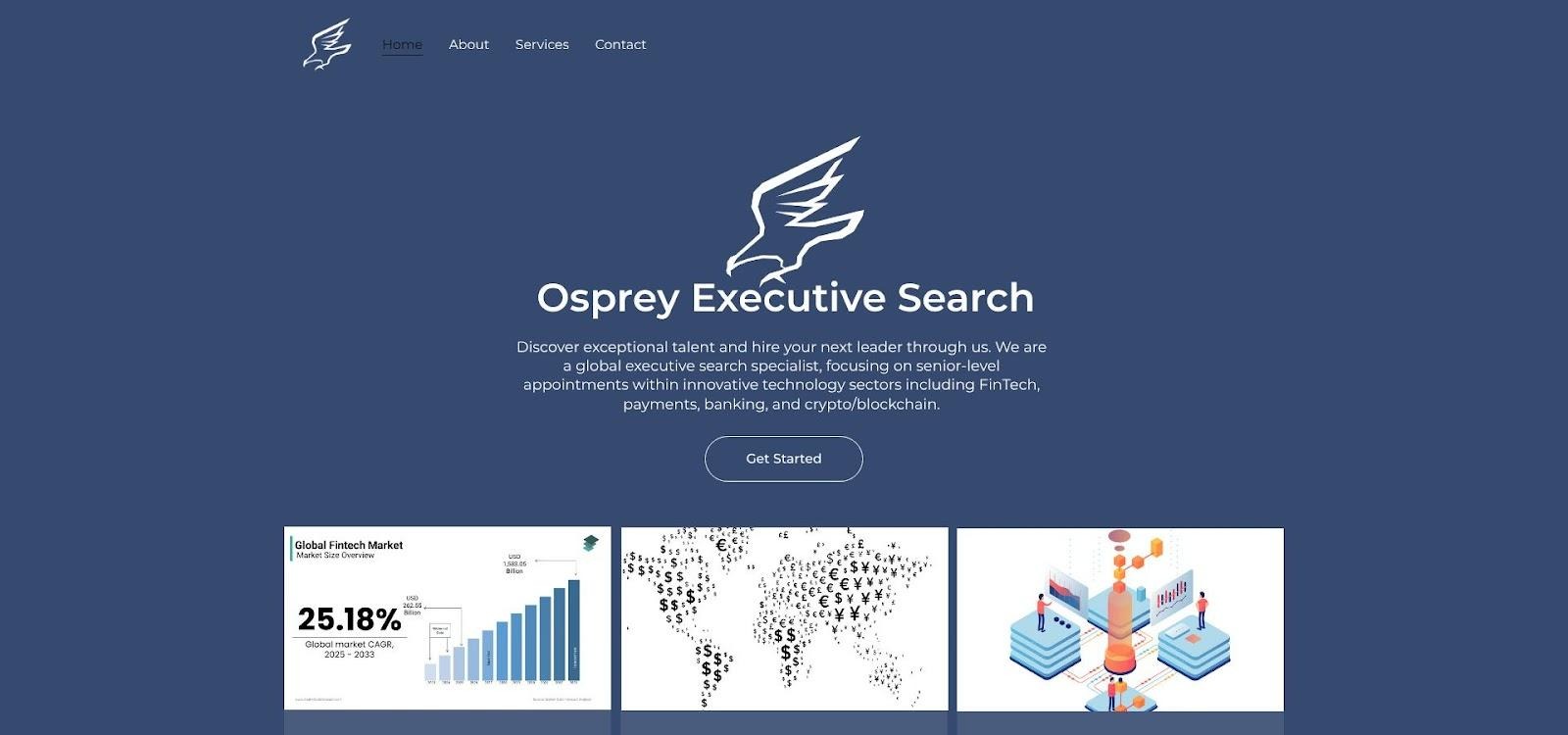
Some searches call for a sniper, not a battalion. That is Osprey’s lane. Founded in London in 2019 by veteran recruiter Kelly Stapleton, Osprey works only in fintech and payments, so every call lands inside your ecosystem. No need to explain tokenised settlements or interchange math; they are already trading war stories about both.
Because the firm is small, you deal with the founder from day one. Stapleton drafts the target profile, checks references, and prepares finalists for your board. Startups value that single point of contact; there is no junior hand-off where context disappears. The model scales farther than many expect: Osprey has placed finance leaders in more than fifteen countries, drawing on a 20 000-strong network of operators who speak FCA, MAS, and OCC in equal measure.
Depth shows up in candidate nuance. Need a CFO who has closed a BaFin discussion on crypto custody? They have one. Want someone who can model interchange at both European and US cap rates? They have three. That precision shortens interviews and cuts false starts, a hidden cost many founders overlook.
Bandwidth is the flip side. Osprey runs only a handful of searches at any moment, so calendar slots fill quickly. If you are late to the party, you may wait a month for kickoff. Fees sit in the 25–30 percent retained range, lower than some global firms but still meaningful for seed-stage budgets. While time zones matter less in a video-first world, US clients should expect early-morning stand-ups to sync with London.
Choose Osprey when you want boutique attention and sector fluency in one partnership. Early- and growth-stage fintechs, especially in payments, crypto, or neo-banking, will feel like the firm was built for them, because in many ways it was.
AI tools to find leads
Send emails at scale
Access to 15M+ companies
Access to 700M+ contacts
Data enrichment
AI SEO writer
Public professional emails
4. Cowen Partners: fast-track results with a safety net
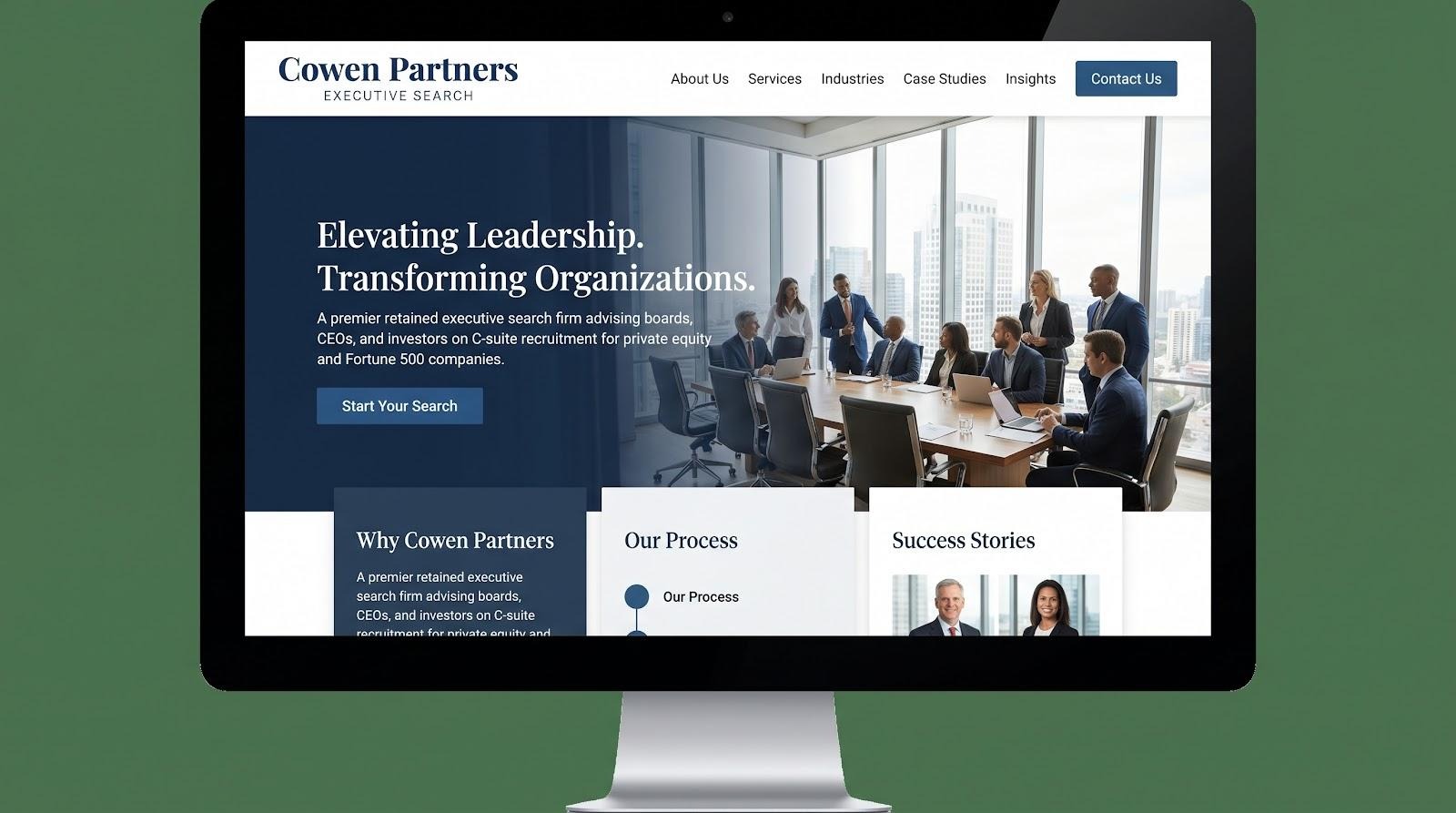
Cowen Partners is the search firm you call when the runway feels like a countdown timer. The team touts an average 38-day CFO placement cycle, shorter than many companies take just to book a first interview. That pace begins with a proactive pipeline: partners court finance leaders year-round, so half the shortlist exists before kickoff.
Speed means little if the hire flames out. Cowen reports on its website a 99-percent one-year retention rate, rare proof that quick does not equal careless. Founders credit strict specification control. Cowen refuses to flood your inbox with “maybes,” preferring a focused slate that meets ninety percent of the brief, right down to CECL or OCC nuances.
Another edge is the guarantee. While many boutiques offer limited protection, Cowen backs each placement with a 365-day replacement promise. Cash-conscious Series B teams value the risk buffer, knowing their investment stays protected for a full year. A senior partner, not a junior hand-off, leads every calibration call and candidate debrief.
There are limits. Cowen’s network is largely US-centric. If your future CFO must sit in Frankfurt or Jakarta, a global firm may serve you better. Because the process moves quickly, you need to match the pace; slow feedback can stall momentum and push top candidates elsewhere.
Pick Cowen Partners when you need a vetted CFO before the next board packet goes out and you want statistical confidence that the hire will still be steering the ship a year from now.
How the finalists stack up
Still weighing your options? A quick side-by-side view clarifies the trade-offs. The table below distils the metrics founders ask about most: recent fintech CFO placements, global reach, typical search time, retention record, and fee model. We pulled the numbers from firm websites, case studies, and third-party press, not marketing gloss.
Firm
Fintech CFO placements*
Primary coverage
Avg. time to fill
1-year retention
Fee model
Stand-out edge
SPMB
~15–20
U.S. (SF & NYC hubs)
8–12 weeks
>90 % (est.)
Retained ~30 %
Deep VC network
True Search
50 +
Global
25 days or less
High (9.3 / 10 client score)
Retained ~33 %
Speed at scale
Osprey Exec
~10
Europe-centric, global reach
~8 weeks
High (founder-led fits)
Retained 25–30 %
Fintech-only focus
Cowen Partners
30 +
U.S. nationwide
38 days avg.
99 % stick rate
Retained
Fast with 365-day guarantee
*Placements refer to fintech CFO roles closed in roughly the last three years, based on public disclosures and client announcements.
Notice the gap between these specialists and the industry average: most generalist searches drag 90–120 days, according to recent finance-hiring data. That delay can equal an entire fundraising quarter.
Use the table as a compass, not a verdict. If global coverage matters most, True leads. If boutique attention or a strong replacement guarantee ranks higher, Osprey and Cowen shine. Align each firm’s edge with your most urgent risk, whether that is time, geography, or sector nuance.
Fintech CFO hiring trends to watch
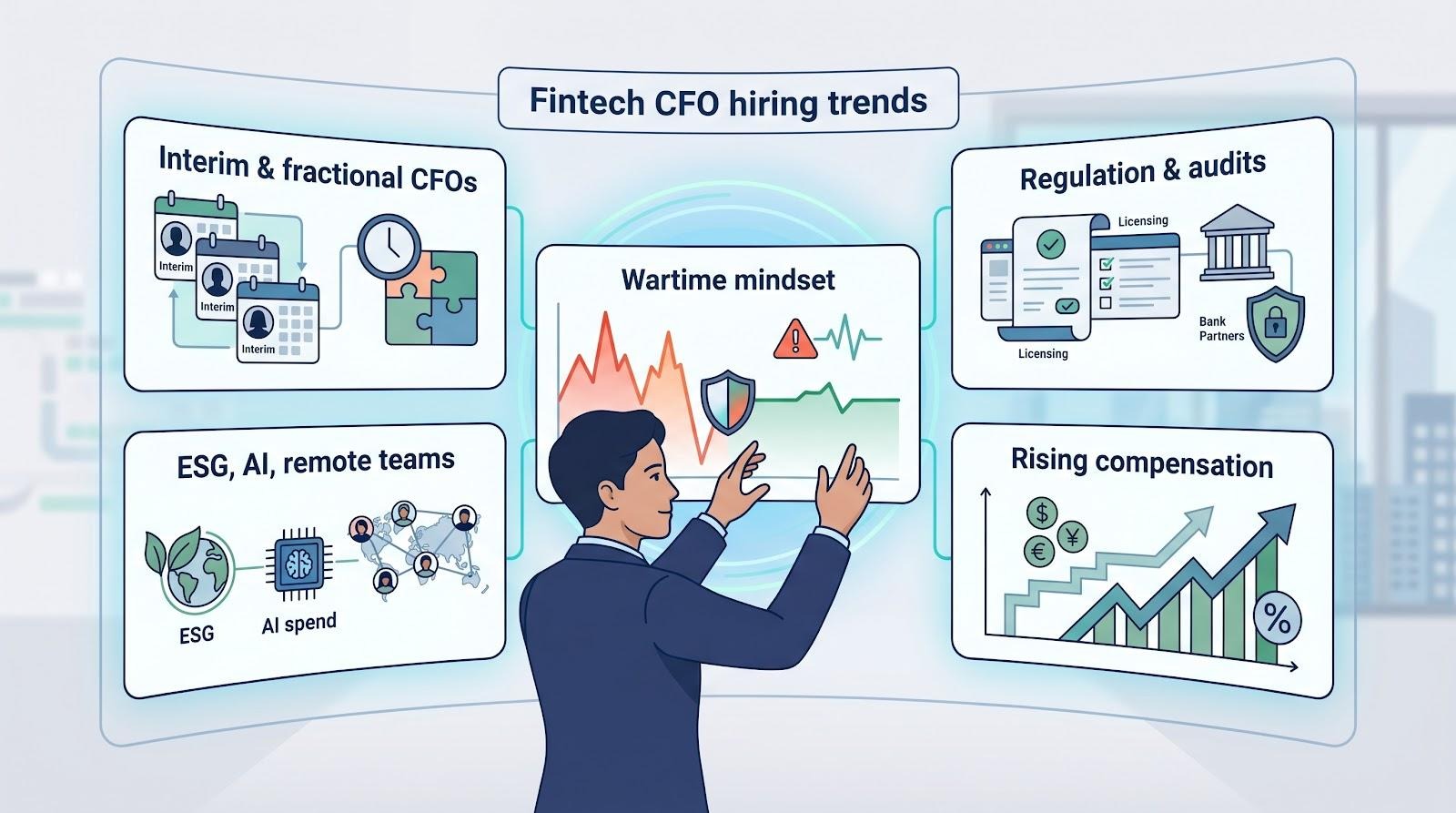
Markets shift, but five patterns appear in nearly every search conversation we join.
“Wartime” mind-sets top the wish list. Growth at all costs is out; profitability and risk control are in. Boards now seek CFOs who have guided a company through a downturn, not just a boom. Interview scripts follow suit: scenario planning, cash runway extensions, and regulator dialogues replace IPO party stories.
Interim and fractional solutions are mainstream. Because a permanent search can span two or three months, founders plug the gap with seasoned fractional CFOs from the same headhunter networks. The move de-risks the business, buys breathing room, and lets you run a thoughtful process instead of a panic hire.
Regulation is rewriting scorecards. Payments, crypto, and consumer-lending startups feel the pressure of new capital and compliance rules. Recruiters now test candidates on everything from bank-partner audits to MAS licensing, turning regulatory fluency into a must-have trait.
The role keeps expanding sideways. ESG reporting, AI spend rationalisation, and distributed team management all sit in the CFO remit. Candidates who can model carbon intensity or align a remote FP&A team across four time zones move ahead of peers who stay inside classic accounting lanes.
Comp packages are climbing. Series B and C fintechs in the United States often pay high-two-hundred-thousand to mid-three-hundred-thousand base salaries plus up to one percent equity. Late-stage players add cash bonuses and IPO accelerators. Expect negotiation prep to take as much partner time as candidate sourcing.
AI tools to find leads
Send emails at scale
Access to 15M+ companies
Access to 700M+ contacts
Data enrichment
AI SEO writer
Public professional emails
Conclusion
Fintech CFO searches move faster and carry higher stakes than ever. The four specialist headhunters profiled here—SPMB, True Search, Osprey Executive Search, and Cowen Partners—consistently out-perform generalists on speed, sector fluency, and retention. Match their unique strengths to your most pressing needs and you’ll land a finance leader who can navigate regulation, accelerate growth, and keep investors confident—well before the runway clock hits zero.
 NEW
Trusthref.com: AI Agents That Grow Your Business In Autopilot
NEW
NEW
Trusthref.com: AI Agents That Grow Your Business In Autopilot
NEW



 Send emails at scale


 AI tools to find & convert leads.