10 ChatGPT Prompts to Help You Run a Smarter Custom T-Shirt Business
29th May '26
Anyleads Team
9 minutes read
10 ChatGPT Prompts to Help You Run a Smarter Custom T-Shirt Business
Running a custom T-shirt business means wearing a lot of hats. One hour you are choosing blanks and colorways. The next you are writing product descriptions, replying to a frustrated customer, or checking whether your margins actually work. Most solo founders and small teams do not have a marketing department, copywriter, or operations manager on call. These ten prompts can turn ChatGPT into a lightweight assistant you can use from the first product idea through fulfillment day.
Why ChatGPT Fits a Lean T-Shirt Business
Speed. A useful first draft of a product description or outreach email can take seconds instead of thirty minutes.
Brainstorming on demand. Need niche ideas at midnight? You do not have to wait for a team meeting.
Decision support. Pricing tables, checklists, and weekly plans add structure without hiring a consultant.
Consistent copy. Prompts with variable slots help keep your voice steady across listings, social posts, and emails.
One important note: ChatGPT is an assistant, not a replacement for judgment. You still own the taste, quality checks, customer promises, and final decisions. Do not ask it to invent customer reviews, false urgency, or claims you cannot support.
10 ChatGPT Prompts That Upgrade Your Day to Day
Use these prompts as templates. Replace the bracketed details with your own audience, costs, product specs, and brand voice, then edit the output before publishing or sending it.
Prompt 1: Discover a Profitable Niche Quickly
Before you print a single shirt, you need to know who is buying and why. This prompt helps you look for gaps in the market without spending hours scrolling through Etsy, Reddit, or social feeds.
Prompt formula: "Act as an e-commerce analyst. Using marketplace reviews and social chatter, list 8 underserved T-shirt niches for [audience], why they buy, top phrases they use, seasonality notes, and 3 risks to avoid."
Follow-ups to try: Ask for micro-niches within the strongest result, request sample slogans for each, and have it outline 60-day content angles you could post around.
Prompt 2: Generate Product Ideas and Slogans That Match Buyer Intent
Once you know the niche, you need shirt concepts that feel specific rather than generic. This prompt pairs ideas with short slogans so you can move straight to mockups.
Prompt formula: "You are a brand copywriter. For [audience] who love [theme], give 15 shirt ideas with 5-word slogans, 3 colorway suggestions, and one clean graphic concept each."
Follow-ups to try: Ask for family-friendly and edgier variants, gift-occasion angles, and bundle names for groups of three shirts.
Prompt 3: Draft a Simple Brand Mark You Can Test on Merch
A recognizable mark helps customers remember your store, but you do not need a large agency project on day one. AI logo design tools can give you starting points to test. The goal is to explore directions quickly, then refine the best option or hand it to a designer once you have traction. If you need rough options before paying for software or a designer, free logo makers can help you compare basic directions.
Prompt formula: "Act as a creative assistant. Based on this brand story [paste 3 lines], suggest 5 minimal logo directions with shapes, font styles, and constraints for print clarity. Provide a one-sentence rationale for each."
Keep your choices simple: one primary mark, one or two fonts, a small color palette, and rules for how the design appears on light and dark shirts. Save the winner, note when to use each version, and keep everything in one folder so your rough ideas become brand assets you can reuse across mockups, listings, packaging inserts, and social profiles.
After you have a few directions you like, test them on product mockups to see how they look on fabric. For a deeper tutorial, Printify has published a useful walkthrough on how to create a logo with ChatGPT with tips on refining outputs and testing a logo on merchandise. Treat AI-generated visuals as rough concepts. Vectorize any mark you plan to use long term, check that text renders correctly, and make sure the design does not copy another brand.
Prompt 4: Write SEO-Friendly Product Titles and Descriptions
Great shirts are easier to sell when people can find them. This prompt builds titles, meta descriptions, and listing copy for Shopify, Etsy, or your own site.
Prompt formula: "You are an e-commerce SEO writer. Write a product title under 70 characters and a 160-character meta description for a [shirt type] about [theme]. Then write a 120 to 160 word description with benefits, fit, fabric, care instructions, and a clear call to action. Include 5 tags."
Follow-ups to try: Request separate versions for Etsy search and Shopify collections, then ask for a bullet-point spec block you can paste below the main copy.
Prompt 5: Social Captions That Spark Saves and Comments
Posting consistently is easier when you are not starting from a blank page every day. This prompt gives you a week's worth of captions with enough variety to keep your feed from feeling repetitive.
Prompt formula: "Act as a social copywriter. Write 7 Instagram captions for [audience] featuring [product or theme]. Include one question hook, one educational tip, and one limited-inventory angle only if accurate. Keep to 120 characters when possible."
Swap Instagram for TikTok, Facebook, or Pinterest, then adjust the length and format to match each platform's style.
Prompt 6: Pricing and Margin Sanity Check
Guessing at prices is one of the fastest ways to burn through cash or leave money on the table. This prompt turns your real costs into a simple pricing table.
Prompt formula: "You are a pricing analyst. Given my costs: garment $[X], printing $[X], platform fees $[X], shipping $[X], propose 3 price points for MSRP, bundle deal, and sale price. Show target gross margin and breakeven units per month. Return a small table and a 2-sentence rationale."
Example cost stack: $4.50 blank, $3.20 DTG print, 12% marketplace fee, and $4.00 USPS shipping. Always validate real fees in your seller dashboard, because platform rates change and ChatGPT does not have live data.
Prompt 7: Supplier or Printer Outreach Email
Cold emails to printers can feel awkward, and many small T-shirt stores use print-on-demand providers like Printify to skip the cold outreach process entirely. This prompt gives you a concise message you can customize in under a minute if you are sourcing from a traditional print partner.
Prompt formula: "Write a concise email to a potential printer requesting quotes for [garment type], [print method], [quantity range], and turnaround time. Ask about color limits, rush options, and sample costs. Keep under 120 words and add a short subject line."
Attach your artwork files or tech pack before sending, and keep the request specific. Printers can quote faster when they know the garment, quantity, print locations, artwork format, and deadline.
Prompt 8: Customer Service Reply for Delays or Defects
A frustrated customer deserves a fast, empathetic reply. This prompt helps you respond calmly without spending twenty minutes trying to find the right wording.
Prompt formula: "Act as a support rep. Write a calm, friendly reply to a customer whose order is delayed by [reason]. Apologize sincerely, share the new ETA, offer a small goodwill gesture, and restate how to track the order."
Follow-up: Ask ChatGPT to turn the reply into a reusable macro you can load into your help desk tool so the next delay email takes seconds instead of minutes.
Prompt 9: Weekly Marketing Plan in One Page
Consistency matters more than perfection. This prompt builds a simple seven-day plan you can complete in short daily blocks.
Prompt formula: "You are a marketing planner. Build a 7-day plan for a custom T-shirt store with 1 email, 3 social posts, a short video idea, and a CTA to drive first-time purchases. Include daily tasks that fit a 30-minute block."
Reuse assets across channels where it makes sense. A social caption can become an email subject line, and a short video script can become a product-page blurb.
Prompt 10: Simple Ops Checklist for Fulfillment Days
When orders pile up, small mistakes, such as wrong sizes or missing tracking uploads, cost real money. This prompt creates a step-by-step checklist you can keep next to your workspace.
Prompt formula: "Act as an operations coach. Create a pre-ship checklist covering artwork prep, print settings, quality check, packing materials, and tracking upload. Add a post-ship note to request a review 3 days after delivery."
Print it out, tape it to the wall, and follow it every time. Consistency here protects your reviews, margins, and customer trust.
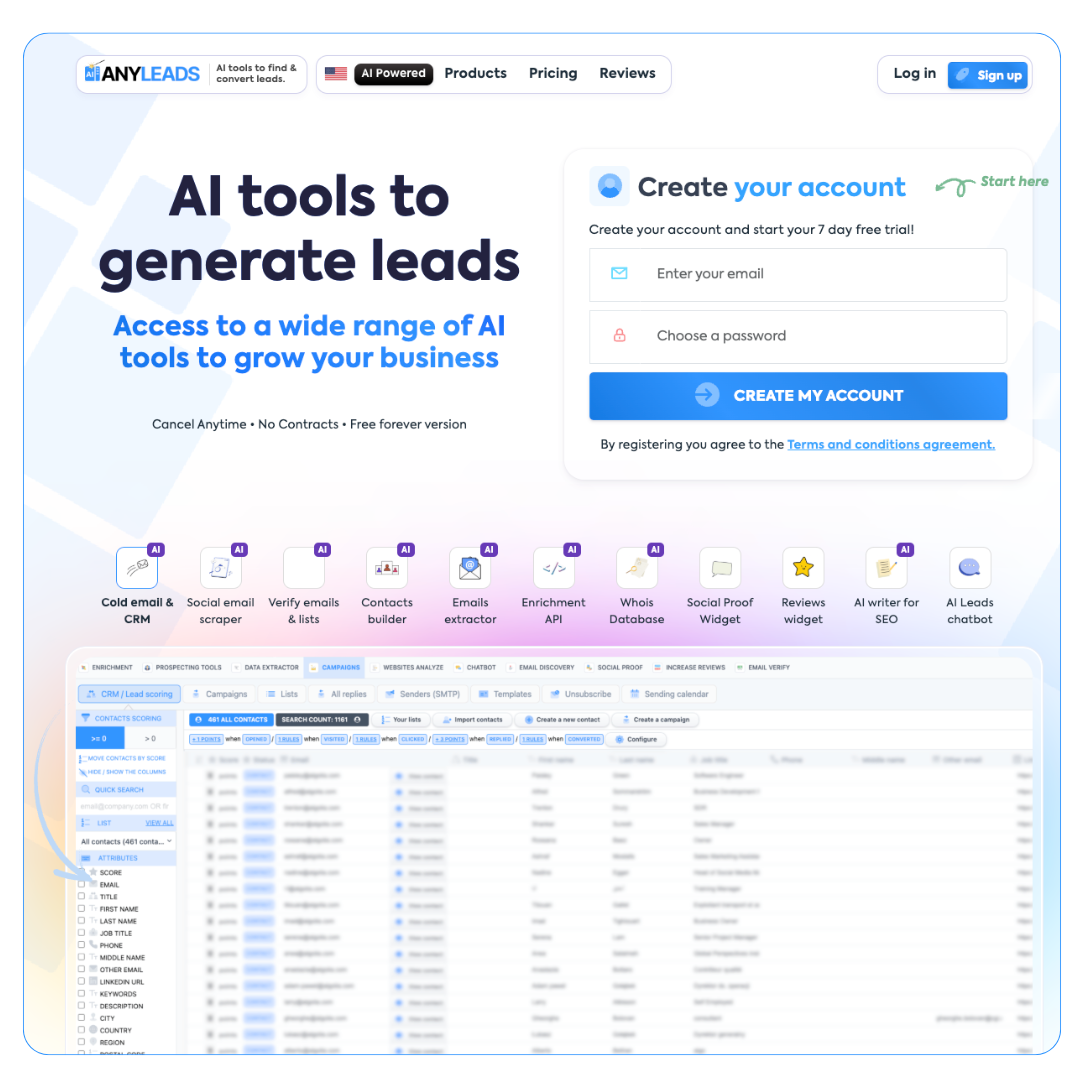
AI tools to find leads
Send emails at scale
Access to 15M+ companies
Access to 700M+ contacts
Data enrichment
AI SEO writer
Public professional emails
Put It Together: A One-Week Workflow
You do not need to run all ten prompts in one sitting. Spread them across a week and build momentum:
Day 1: Niche research and product ideas with Prompts 1 and 2.
Day 2: Logo exploration and mockup testing with Prompt 3.
Day 3: Product listings and SEO descriptions with Prompt 4.
Day 4: Social captions and scheduling with Prompt 5.
Day 5: Pricing review and supplier outreach with Prompts 6 and 7.
Day 6: Customer service templates and an ops checklist with Prompts 8 and 10.
Day 7: Weekly marketing plan and review with Prompt 9.
By the end of the week, you will have a library of reusable prompts and outputs you can adjust for each new product cycle.
Conclusion
These prompts will not build your business for you, but they can speed up the thinking and writing that take over your week. Copy them, paste them, swap in your details, and edit the results until they sound like your brand. Save the versions that work best and revisit them every few weeks as your product line and audience evolve. The advantage is not the AI by itself. It is the time you get back to focus on design, quality, and the customer experience that keeps people coming back.
FAQs
Do I need the paid version of ChatGPT to use these prompts?
No. The free tier can handle these prompts. A paid plan may offer faster responses or access to newer models, but it is not required. Start free and upgrade only if the speed or features improve your workflow.
How often should I refresh my prompts?
Review them every two to four weeks. Markets shift, trends fade, and your product line evolves. Updating the variable slots, such as audience, theme, or cost figures, keeps outputs relevant without rewriting every prompt.
What details should I include when asking for product descriptions?
Include the shirt style, fabric blend, fit type, target audience, main theme or slogan, and any keywords you want to rank for. The more specific your input, the less editing the output usually needs.
Can I rely on AI for fully original art?
AI can generate visual concepts and rough drafts, but it may produce inconsistent text, familiar-looking styles, or details that need cleanup. Treat outputs as starting points. Always review, refine, and consider hiring a designer for final production artwork.
 NEW
Trusthref.com: AI Agents That Grow Your Business In Autopilot
NEW
NEW
Trusthref.com: AI Agents That Grow Your Business In Autopilot
NEW

 Send emails at scale


 AI tools to find & convert leads.